
In today’s fast-paced work environment, productivity is more than just putting in hours. It’s about making the most of time — for individuals, for teams, and for the organisation as a whole. This is where employee time tracking becomes a powerful ally.
When used the right way, time tracking is not about constant surveillance. It’s about gaining clarity, understanding work patterns, and creating better systems that help people do their best work.
What is employee time tracking?
Employee time tracking is the process of recording how work hours are spent across tasks, projects, applications, and activities. It gives businesses visibility into:
- How much time is spent on different tasks and projects
- Active work hours vs. idle time
- Application and website usage
- Work patterns and productivity trends
It provides a clear view of where time goes, whether the team is working on client projects, internal tasks, meetings or other work-related activities.
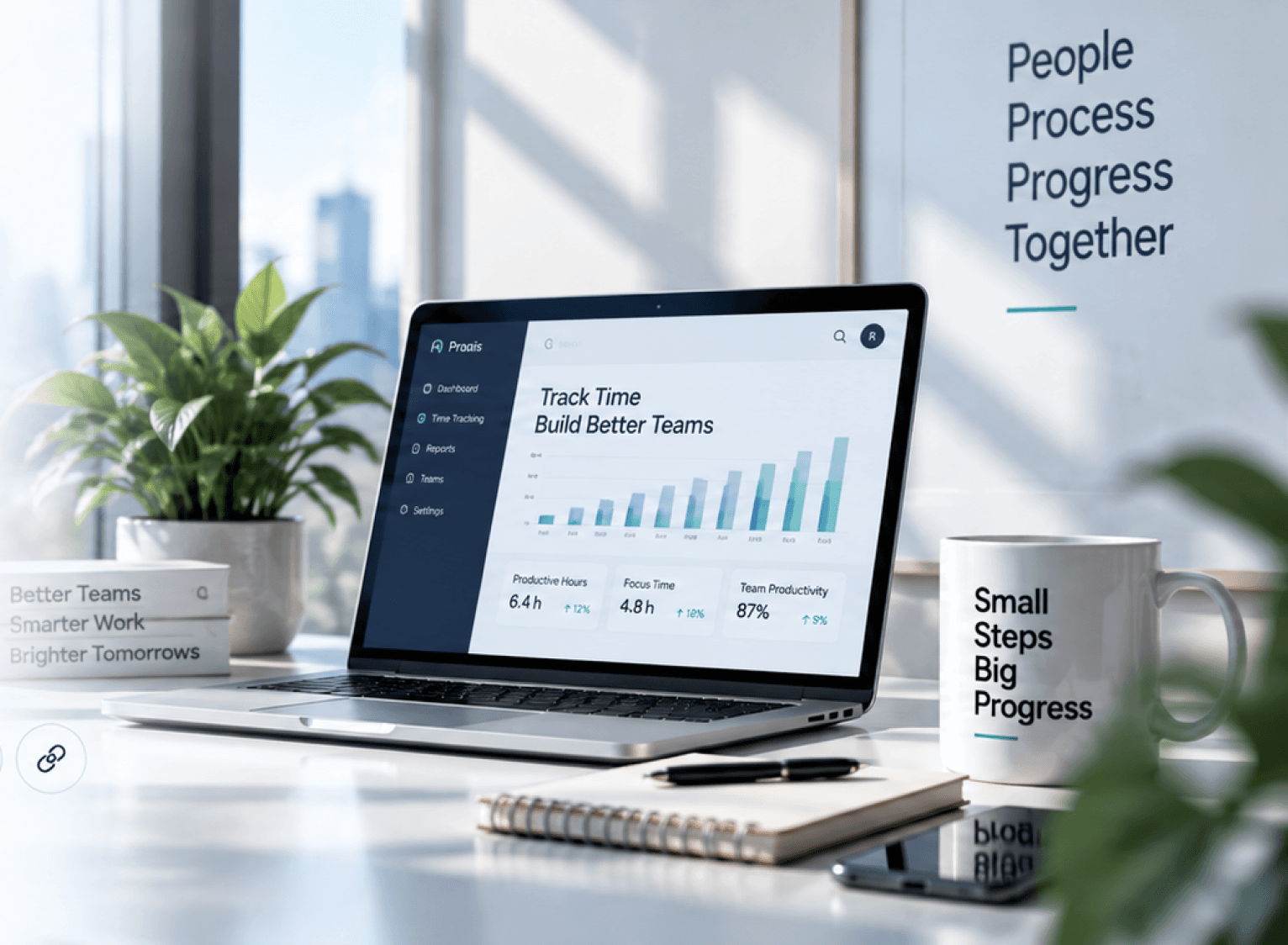
Modern time tracking tools like Praxis Tracker capture this information automatically in the background, helping businesses understand real work patterns without adding manual effort. The goal isn’t to monitor people, but to give teams and managers the visibility they need to make better decisions.
Why time tracking matters for productivity
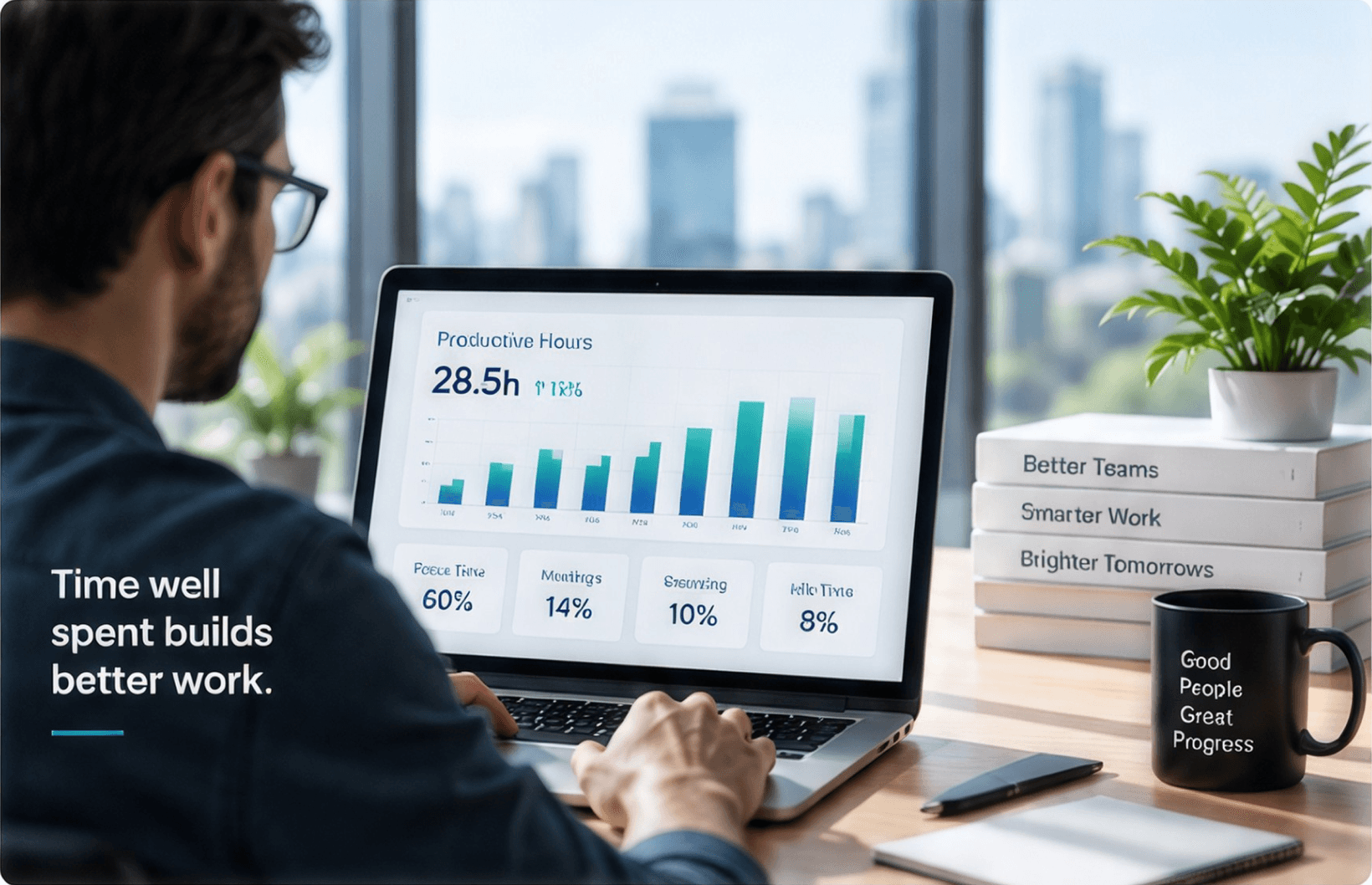
Without visibility, it’s easy for important work to get lost in a mix of tasks, interruptions and distractions. Time tracking helps bring clarity by showing how time is actually spent, not just how it was planned to be spent.
This visibility allows businesses to identify inefficiencies, reduce time lost on non-essential work, and ensure that resources are focused on high-priority tasks. It also helps teams take ownership of their time, stay focused and build better work habits.
How time tracking improves productivity
When teams have a clear understanding of where their time goes, they can make small but meaningful changes that lead to big improvements. Time tracking helps reduce distractions, encourages better focus, and makes it easier to manage workloads. It also supports more realistic planning, as decisions are based on actual data rather than assumptions.
Over time, this leads to more efficient workflows, better use of resources and a more productive, engaged team. For managers, it provides the insights needed to remove roadblocks, balance workloads and create an environment where everyone can perform at their best.
Final thoughts
Employee time tracking is not just about measuring hours — it’s about creating a clearer, more efficient and more productive way of working. With the right approach, it helps teams focus on what matters, reduces inefficiencies and supports long-term growth.
At Praxis Tracker, we believe that visibility leads to better work, and better work creates brighter tomorrows.